
More Leahy BTV Airport | Nic Longo

/
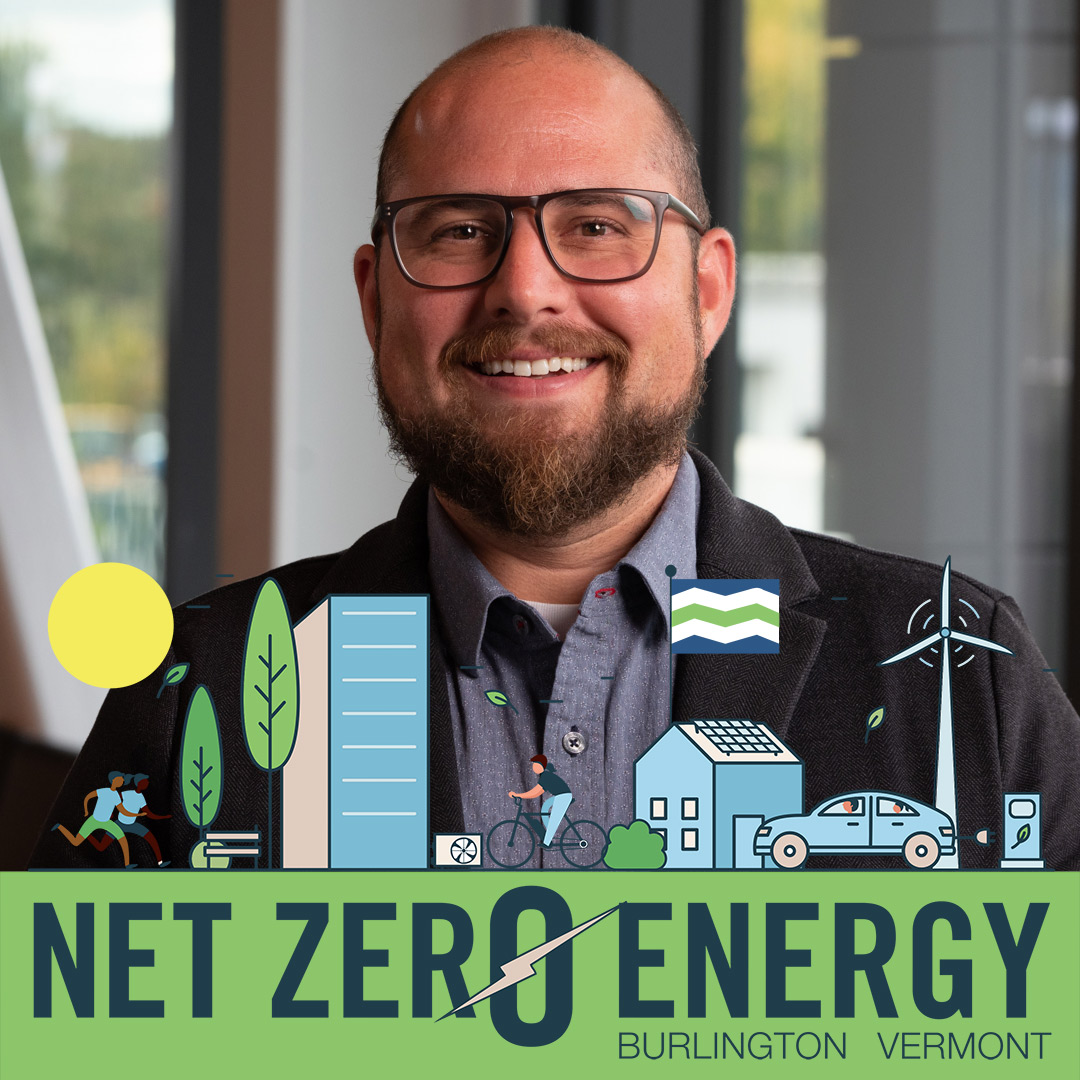
Nic Longo, Director of Aviation at Patrick Leahy Burlington International Airport, discusses the airport’s sustainable growth and climate initiatives. Learn how the airport’s new terminal uses mass timber construction, geothermal heating and cooling, and other strategies to reduce carbon emissions while accommodating increased passenger demand. The conversation also explores sustainable aviation fuel, fleet electrification, tenant partnerships, and the Airport Carbon Accreditation program. Discover how regional collaboration is helping advance Net Zero Energy goals for Burlington and Vermont residents.
transcript
00:00 Jennifer Green: Hello, Burlington, and welcome to Net Zero Energy. I’m Jennifer Green, Director of Sustainability for the City of Burlington, where our goal is to reduce and eventually eliminate fossil fuel usage. Today, we’re thrilled to have Nic Longo with us. Nic is the Director of Aviation at the Patrick Leahy Burlington International Airport. Nic, it’s great to have you.
00:31 Nic Longo: Hello, Jen. It’s great to be here.
00:33 Jennifer Green: We were looking back at our records. I think you were here several years ago. At that time, I think the airport’s new building was a pipe dream.
00:46 Nic Longo: I think you’re right. Since we last spoke on the podcast, our operations, passenger counts, and terminal footprint have all grown. As we look at expansion projects, whether runway improvements, terminal growth, or other facilities, we want to approach them sustainably, both financially and environmentally. We also want to ensure we’re meeting the needs of the community around Burlington. That’s exactly what we’ve done.
01:40 Jennifer Green: Tell us about the airport expansion, why it happened, and what it looks like now that it’s complete.
01:47 Nic Longo: We have a brand-new public building. It’s about a 30,000-square-foot expansion across multiple stories. It includes a new observation tower and observation patio open to the public, surrounded by beautiful landscaping and mountain views.
Beyond the visitor experience, the building incorporates major sustainability features. We used a substantial amount of mass timber to reduce embodied carbon and minimized steel use where possible. We also installed geothermal wells so the building is heated and cooled entirely through geothermal energy.
03:09 Jennifer Green: BED helped support that geothermal development, including offsetting some well testing costs. Burlington Electric and the City of Burlington are working to reduce fossil fuel use in buildings and transportation, so this project was an important contribution to that mission. Can you talk more about the decision to use mass timber and reduce the use of steel and concrete?
03:44 Nic Longo: Early in the design process, we evaluated traditional construction versus mass timber. We considered cost, grant opportunities, and whether it would actually reduce our environmental footprint over the long term.
The mass timber wasn’t sourced from New England because federal Buy American requirements applied, so it came from the Pacific Northwest. Before moving forward, we calculated the transportation emissions and found that even with trucking, the carbon benefits were still more than tenfold in our favor.
The project cost more initially, but grants helped offset that expense. Support came from Burlington Electric for the geothermal system, the Northern Border Regional Commission for part of the mass timber costs, and the Federal Aviation Administration. That allowed us to meet our financial and sustainability goals simultaneously.
05:44 Jennifer Green: Beyond the building itself, I know you’ve also focused on stormwater management and solar. Can you talk about broader sustainability efforts?
06:09 Nic Longo: We’re already discussing future expansion projects and evaluating sustainability for future facilities. The airport manages more than 900 acres, most of which is owned by the City of Burlington and the airport.
Sustainability extends underground as well. We manage extensive stormwater, wastewater, and aircraft de-icing systems. We continuously look for opportunities to improve efficiency and reduce impacts. We also work with tenants and contractors to ensure they’re building and operating sustainably.
07:37 Jennifer Green: Speaking of tenants, who are some of the airport partners helping advance those sustainability goals?
07:51 Nic Longo: The Vermont Air National Guard has been a leader. Before our terminal project, they had already installed battery storage and geothermal systems.
Beta Technologies also incorporated geothermal into its expansion. Our terminal is actually the third geothermal installation on airport property. We have 32 wells drilled about 600 feet into the ground.
Another leader is Heritage Aviation. They’ve long supported sustainability through solar panels and green roofs, and they’re now the first provider in New England offering Sustainable Aviation Fuel. That fuel reduces lifecycle carbon emissions while remaining compatible with existing aircraft.
Large airports, including Boston Logan, have reached out to learn how Heritage Aviation accomplished that here in Burlington.
09:49 Jennifer Green: Where did the motivation for Sustainable Aviation Fuel come from?
09:58 Speaker 3: All of the above.
10:00 Nic Longo: Exactly. It came from Heritage Aviation, airport leadership, and the pilot community. We’ve spent years discussing the opportunity.
The challenge is cost. Sustainable Aviation Fuel can cost roughly twice as much as conventional jet fuel. Fortunately, local pilots and aircraft owners demonstrated demand for the cleaner fuel, helping make the business case for offering it.
10:52 Jennifer Green: We’d also be remiss if we didn’t mention Skinny Pancake and local food.
10:58 Nic Longo: Sustainability can take many forms. Skinny Pancake supports local food sourcing at one of Vermont’s largest transportation hubs.
Hudson News has implemented recycling programs. Other airport businesses, including Pratt & Whitney, ARADIGM, and Vermont Flight Academy, contribute to waste reduction and carbon reduction efforts as well.
11:45 Jennifer Green: BED has also supported your fleet electrification efforts. Is that right?
11:54 Nic Longo: Absolutely. We operate a large fleet ranging from passenger vehicles to sweepers and snow removal equipment. Burlington Electric has helped us identify funding opportunities and pathways to transition vehicles from gasoline and diesel to electric power.
Today, we have seven or eight fully electric vehicles. We’ve partnered with Beta Technologies so our vehicles can charge using their aircraft charging infrastructure.
As technology advances, we’re hopeful even larger equipment, including 80-foot snowplows, can eventually be electrified. In the meantime, we’re incorporating hybrid technologies wherever possible.
13:20 Jennifer Green: You’re also participating in the Airport Carbon Accreditation program. Tell us about that.
13:27 Nic Longo: Airport Carbon Accreditation is a global program administered through Airports Council International.
The program includes seven levels of accreditation. It’s a tremendous amount of work, and our team, including Madison Reagan and Larry Lackey, has done an incredible job integrating sustainability into planning and operations.
We recently achieved Level 1 accreditation, which focuses on establishing and managing a carbon emissions inventory and baseline.
We’re now pursuing Level 2, which involves policies, emissions reduction planning, tenant engagement, and demonstrating measurable reductions from that baseline.
Locally, we also work with the Mayor’s Climate Advisory Action Group, which helps keep us focused on meeting broader climate goals.
While Scope 1 and Scope 2 emissions are important, we’re increasingly focused on Scope 3 emissions, which include airlines and other third-party activities. Reducing those emissions will require tools like Sustainable Aviation Fuel and stronger sustainability requirements throughout the airport ecosystem.
16:51 Jennifer Green: Let’s have you back sometime to talk about your progress through those seven levels.
16:58 Nic Longo: Amazing. I’m looking forward to it.
17:00 Jennifer Green: Nic, it’s been a pleasure having you. After visiting the new terminal, I can say it’s aesthetically beautiful, and it’s exciting to know about the sustainability features that aren’t always visible but make a meaningful difference.
17:14 Nic Longo: Thank you, Jen. It’s always great partnering with Burlington Electric Department. To learn more about our sustainability efforts, visit www.btv.aero.
17:32 Jennifer Green: Thank you again for listening to Net Zero Energy from Burlington Electric Department. If you have questions about this show, BED rebates, or technical support, visit burlingtonelectric.com or call 802-865-7300. We’re here to help you on our mutual path to Net Zero Energy.